This article highlights the critical role of economics and market design in scaling global platforms. It demonstrates how data science bridges the gap between product strategy and public policy, providing a blueprint for using forensic analysis to solve complex business challenges.

The story of Airbnb’s Head Economist for Policy and Director of Data Science involves geology, co-teaching with a Nobel Prize winner, and CSI. (No, not the hit TV franchise.)
Peter Coles was born and raised in Milwaukee, Wisconsin. He studied math at Princeton, earned his PhD in economics at Stanford, and taught at Harvard Business School before joining eBay and becoming a Data Science leader at Airbnb.
As you’ll see from his story, Peter has a deep interest in how marketplaces work. By transitioning from academia to the business world, he not only gets to study first-hand data about millions of guests and hosts, but also to influence product and policy decisions. And he still gets to hang out with academics. Check out all the research Peter and his team are doing here.
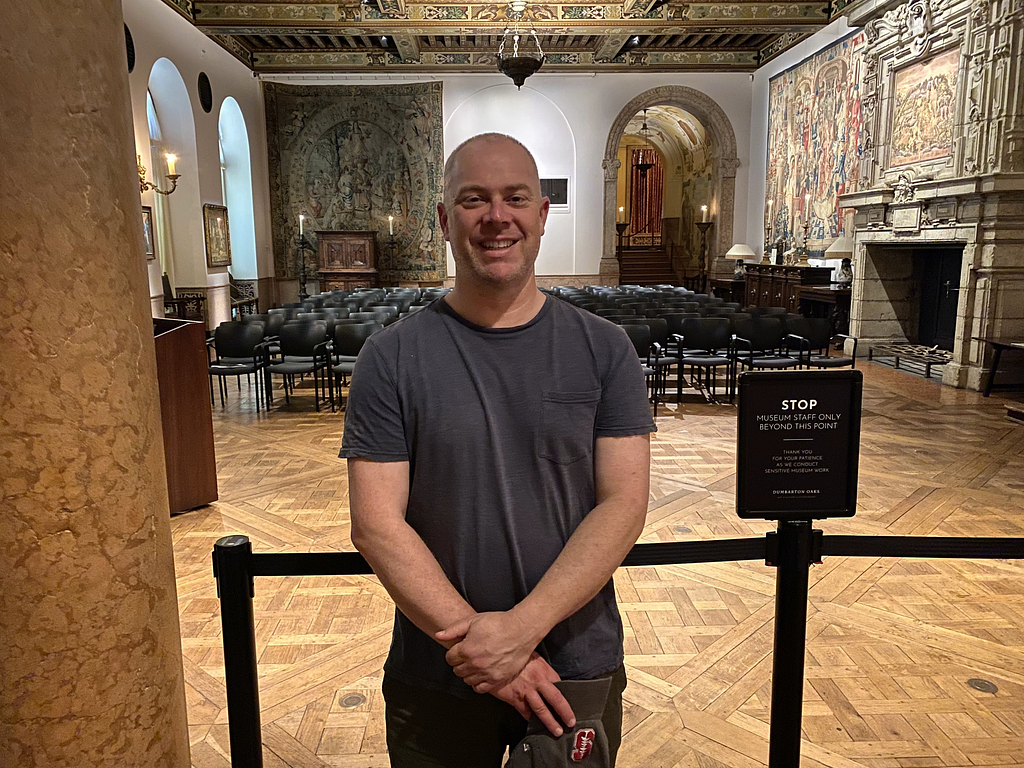
My fascination with marketplaces goes back a long time.
Sometime around second grade in Milwaukee, Wisconsin (where I grew up), my friends and I had the great idea to run a rock stand. It was like a lemonade stand, but instead we would sell rocks. Rocks we found in the street. Neighborhood kids could find their own rocks and sell them, and we’d take 25%. Nobody got any sales. Fortunately I’ve learned a bit more about marketplaces since then — more about that shortly.
From kindergarten through high school, I was a public school kid. My parents valued education, and helping others — my father was a doctor, my mother a nutritionist — and those are values I still hold dear.
While I played soccer and tennis and was moderately social, this period was probably best defined by an obsession with competitions. Math, Chess, Science Olympiad, Quiz Bowl, Academic Decathlon, puzzle races with my younger brother — there was hardly a nerdy competition offered where I didn’t compete. Time well spent? Let’s just say I missed a lot of high school parties while studying to become the five-time Wisconsin State Rocks, Minerals, and Fossil Identification champion — so you can be the judge.
By the time college came around, it seemed time to rebel. I wanted to be done with the nerdy stuff. I applied and was accepted to Princeton, and started studying ancient history. After one semester and (in my view) an underappreciated essay on the Hittites, I was back to majoring in math. At least I was good at that! I figured I could work on practical skills later.
After graduating, I accepted a fellowship in Germany and continued to Stanford for a PhD in economics — a somewhat more applied science, though I focused on game theory, at the intersection of math and strategy. I had the good fortune there to be the second graduate student of Jon Levin, now the President of Stanford University, who taught me the importance of simplification in research — even when the subject matter itself is complex.
Even while in this still-theoretical space, I kept my feet on the ground — or at least on the pedals. During a monthlong break in my classes in Germany, I biked around Europe, crashing with friends and family members of my classmates — people I had never met before staying with them. In a sense, I was prototyping Airbnb well before it existed!
My time in graduate school was Silicon Valley in the 2000s, after the dot-com crash, so tech was in the midst of a renaissance. Many of my friends were at growing companies like Google and Amazon. It was very tempting to stay in California to be a part of this, but I ended up with one more stop in academia.
Harvard Business School, known for its focus on managerial science, was perhaps the most compelling place in the academic world that would allow me to stay close to the tech industry. I got a double stroke of good fortune: not only was I offered an assistant professorship there, but I also got to co-teach with Al Roth, a founder of the field of Market Design. Al is still an important mentor to me, and later won a Nobel Prize!
In my time researching and teaching graduate students, I was exposed to many examples of market design, conducting research on the topic of “Matching”; that is, mechanisms to pair users from two groups, often when price cannot be used to clear the market. This covered strategy of participants, signaling in markets, and I even had a chance to improve the market for PhD economists. I also wrote a number of case studies, including on Zillow, Microsoft, Craigslist, and more. The teaching and writing was a lot of fun, but I also came to realize I wasn’t a fit for academia in the long term. My attention span was too short to dedicate most of my time to research papers (and especially peer reviews), but I was enormously appreciative of this phase of my career.
By this point it was 2013, and two simultaneous and interrelated phenomena were exploding in tech: mobile and the sharing economy. It was a perfect time to head back west and finally enter the tech world.
I landed at eBay, which for a student of marketplaces was an ideal company: just about everything is for sale, and it was ripe for market design. Steve Tadelis, a mentor from my Stanford days, had created one of the first economics teams inside a tech company, which I took over when Steve left. At the same time, eBay was getting on the data science train — this was before every company had a DS team — and my group joined another to form eBay’s Data Labs. One of my favorite projects there was a project called “What’s it Worth” (which I worked on with Airbnb colleague Dean Chen), where we developed a methodology for determining the fair market value of items. Some hands-on practical work, some modeling — this was just what I was hoping for.
In 2015 Riley Newman, one of Airbnb’s first employees and then its Head of Data Science, presented an even more enticing opportunity. The Airbnb platform was growing quickly, and for the first time attracting substantial regulatory attention. They needed an economics team to partner with the growing policy team, to jointly address the question of Airbnb’s relationship to cities. This was a new way for me to apply economics. I was all in.
When I think back to my eight and a half years so far at Airbnb, I view this as entailing three “phases.” In the first, I worked to address economic questions by establishing a global team of data scientists and economists to analyze the relationship of short-term rentals to the world.
Meanwhile, as Airbnb continued to grow, execs were asking big questions that couldn’t be answered by any specific data science team. They needed a group with visibility across the whole organization. So in this second phase, Jackson Wang and I founded a team called Central Strategy & Insights, or CSI.
The acronym was no coincidence: we saw ourselves as forensic investigators, piecing together stories as we collected evidence. One important period of CSI’s work addressed changes brought on by the pandemic — in particular a major adjustment in where guests were looking to stay, and the supply we’d need to accommodate them. We also led the company’s business reviews, and generated analyses to describe the business to shareholders ahead of the IPO.
My third phase at Airbnb started a lot like the first, but supersized: developing models to inform a well-considered approach to policy considerations, this time as travel rebounded after the pandemic and governments were no longer fully occupied with a public health emergency. Our newly expanded group of economics PhDs and analysts also came up with ways to evaluate Airbnb’s impact on guests, hosts, and society, including via our US Economic Impact Report.
Almost all of my first several years at Airbnb had been internally facing. That’s changed in recent times, as we’ve spun up and expanded a program to collaborate with academic researchers to analyze Airbnb’s data and improve the experience for users.
The first step was to figure out how to collaborate with external researchers, while respecting privacy and legal limitations. Collaboration interest then came quickly. We have now published well-received papers with professors from MIT, Berkeley, Stanford, UCLA, NYU and more, with others in progress. One paper I wrote with colleagues and academic partners develops foundations for what “quality” means in platforms, from an economic perspective.
We’ve also launched a monthly seminar where we invite our academic collaborators to discuss research with Airbnb data scientists and technologists. Developing research is great, but there’s nothing like live discussions to cross-pollinate and foster ideas. This builds on a strong collaborative learning tradition at Airbnb, with internal classes and reading groups to grow our skills and keep up with tech developments.
Alongside engaging with academia, I’m so excited my data science colleagues and I have a mandate to be innovative and proactive. We have the space and encouragement to work on big ideas, even if they might take a year or two to prove out — and perhaps more importantly, even if some of the ideas fail. But nothing is more important than the people. I am proud of the students, scientists, and even professors I have hired here over the years, and love seeing them grow and find success.
A license to tackle big topics, continual education, research on the product as well as its relationship to the outside world, amazing colleagues, and a direct connection to academia all make Airbnb a unique place to be a market designer, economist, and data scientist. Whether or not you spent your free time in eighth grade studying rocks.
If you want to learn more about the research happening at Airbnb you can read our published papers here. If this type of work interests you, check out our open roles.
My Journey to Airbnb: Peter Coles was originally published in The Airbnb Tech Blog on Medium, where people are continuing the conversation by highlighting and responding to this story.
Continue reading on the original blog to support the author
Read full articleThis article illustrates how specialized fields like economics and market design are integrated into data science to solve complex business and policy problems. It provides a roadmap for engineers and scientists transitioning from academia to high-impact leadership roles in tech.
CASTLE solves the cold-start problem for search systems by synthesizing realistic training data from existing behavioral signals. This allows teams to deploy high-quality natural language search models before collecting any real user queries, ensuring a strong Day 1 user experience.
Synthetic benchmarks often fail to capture production nuances. This system allows engineers to validate database upgrades and capacity plans using actual traffic patterns, significantly reducing the risk of regressions and performance issues during migrations.
This approach enables effective personalization for anonymous users while navigating strict privacy laws and cookie deprecation. It offers a scalable blueprint for solving cold-start ML problems by leveraging geographic correlation instead of individual tracking.
